

Amazon(s) Prime
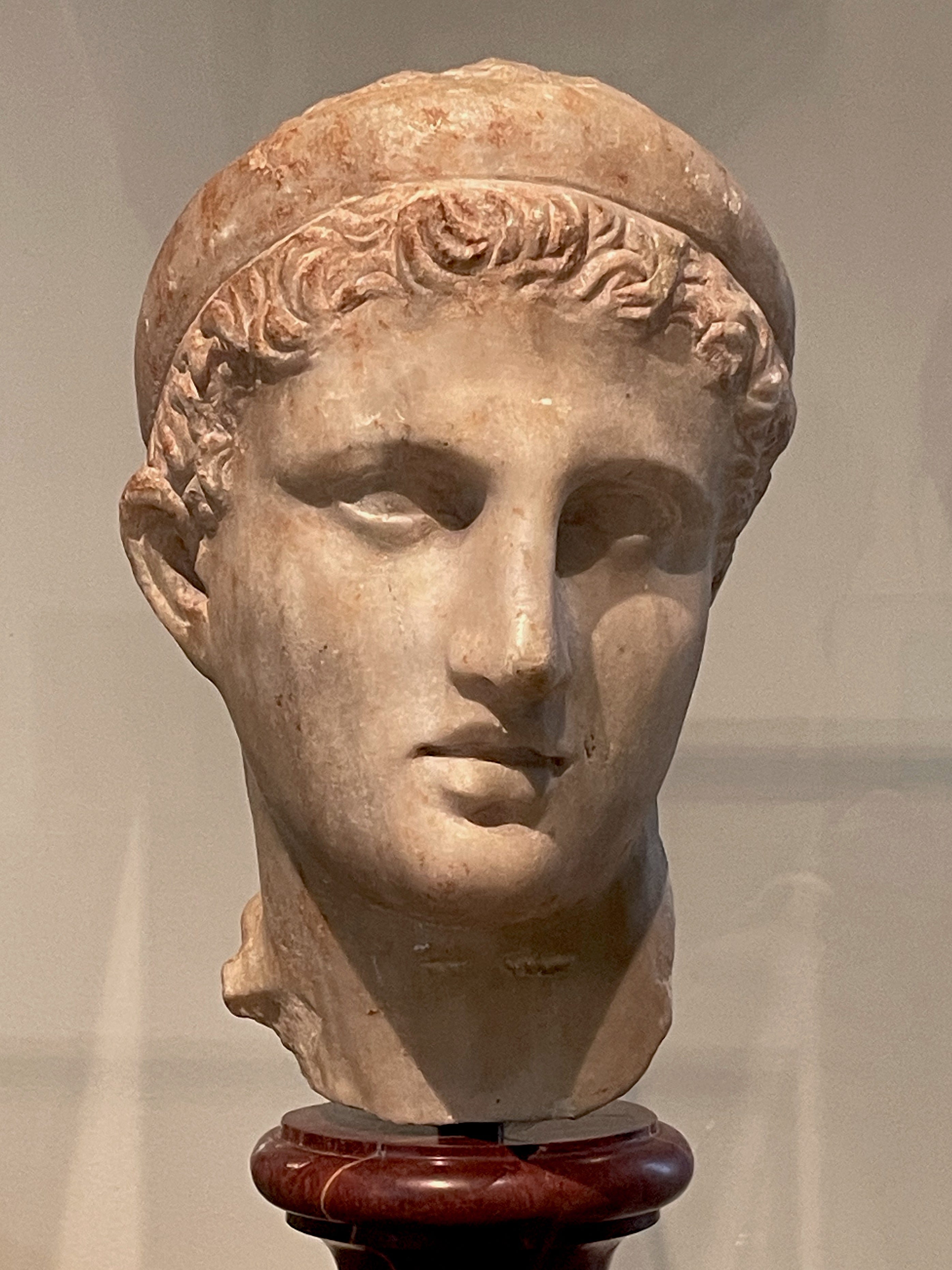
If you’re anywhere near my age and were lucky enough to visit the Met in the 1970’s or 80’s, you might remember the incredibly glamorous café that occupied the southeast corner of the museum for several decades, with its skylit central fountain and potted palms.
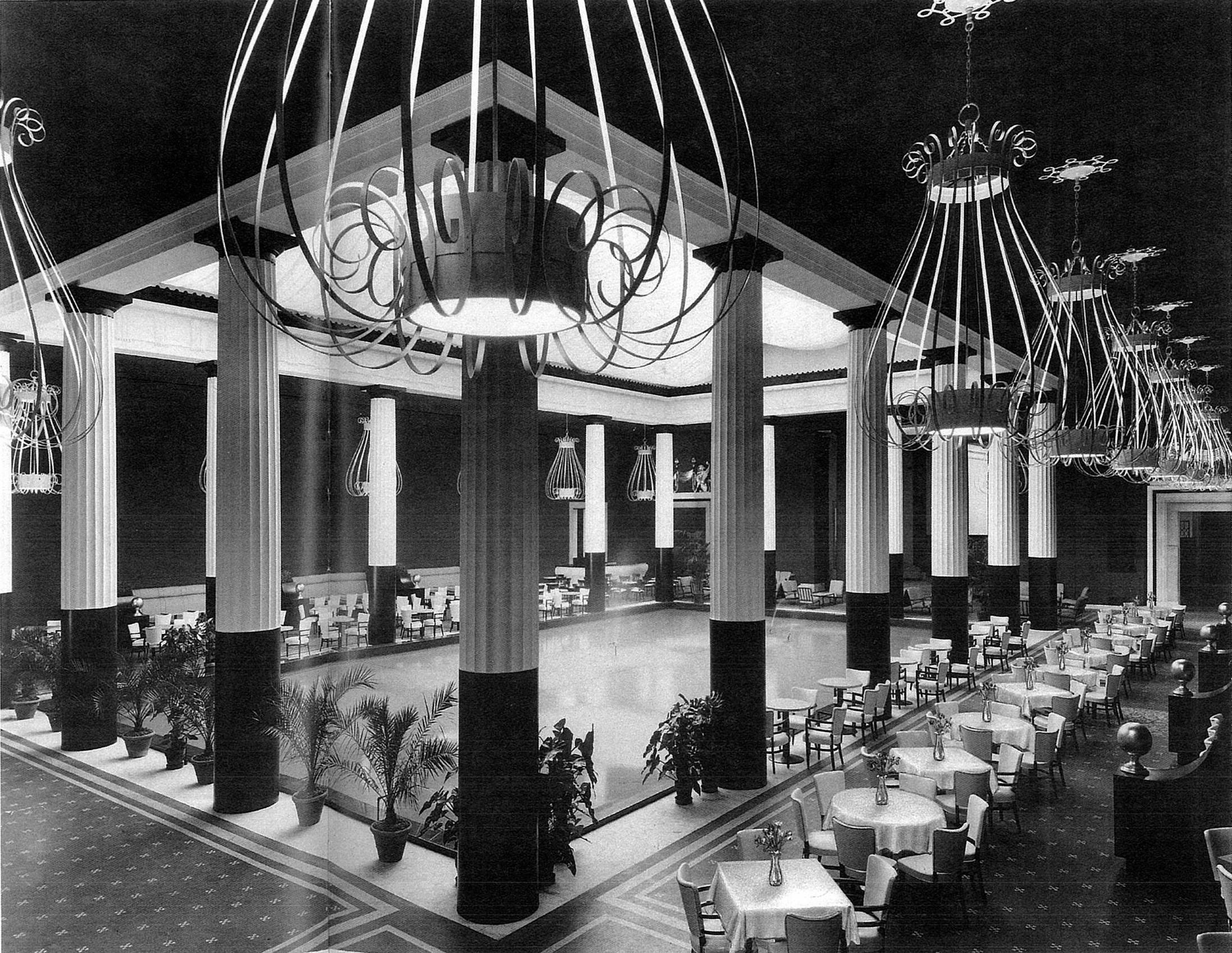
Designed by renowned decorator Dorothy Draper in 1954, with a bold pink color scheme and huge birdcage chandeliers, the café is what initially sparked my love affair with the museum - and maybe with the entire city. Sadly, the central fountain was eventually drained to make room for more tables, and the entire cafe was closed 25 years ago when the Met renovated and expanded their Greek and Roman galleries. Is it a better use of the space? I’m torn.
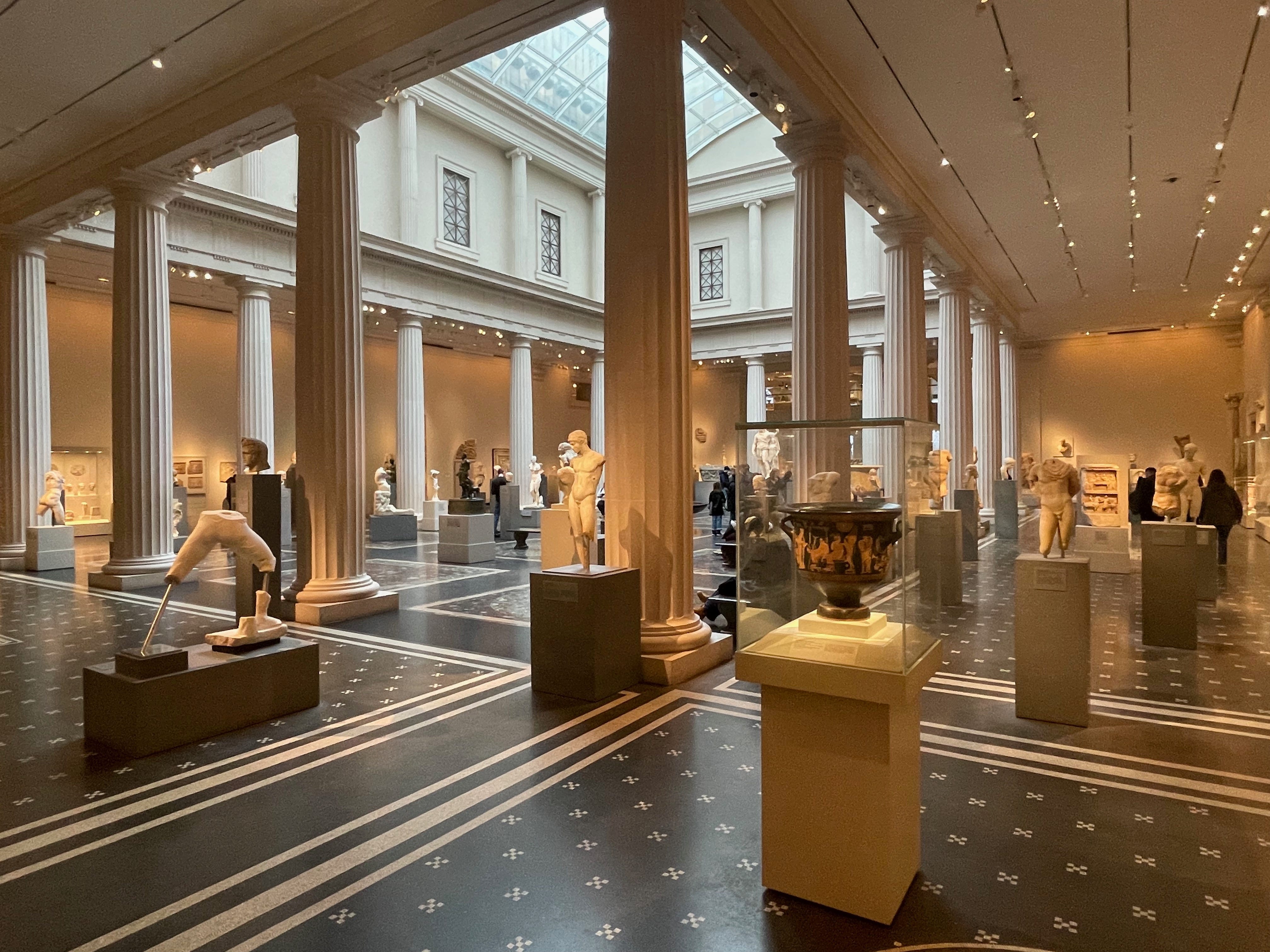
Renamed the Leon Levy and Shelby White Court, it now anchors the Met’s twenty galleries of classical art. Anyone involved in the nonprofit world in New York will be familiar with the philanthropists for whom the gallery is named; during my 23 years at the New York Botanical Garden, most of my time was spent in the Leon Levy Visitor Center. And even though I can no longer enjoy an egg salad sandwich at a table next to the fountain, it’s still a lovely, serene space to pause and contemplate a few thousand years of artistic achievement. Which is exactly what I did as I continued my exploration of the classical galleries this week.
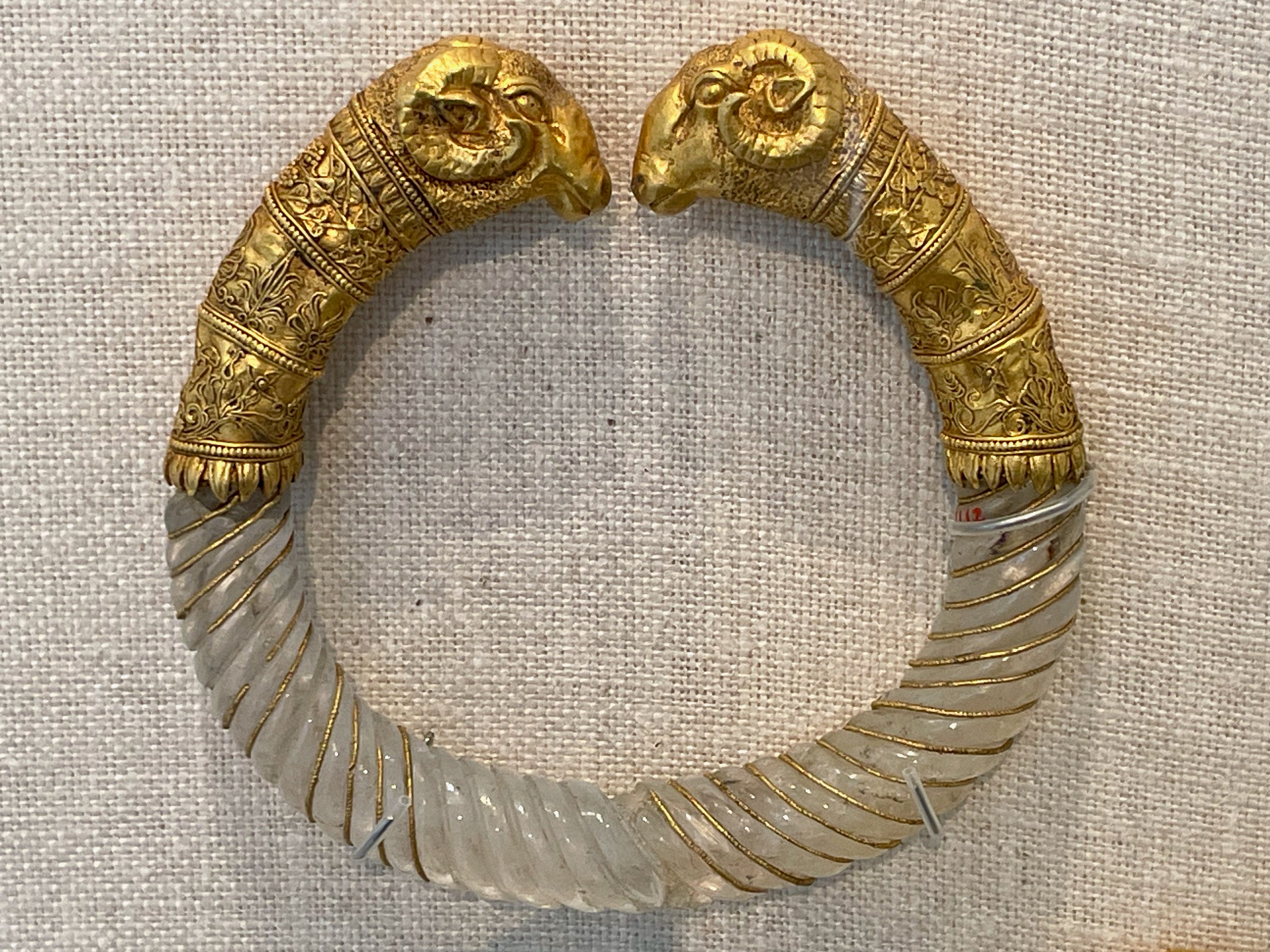
Gallery 158: Greek Art – Fourth Century BCE
Highlighted artwork – Ganymede jewelry, ram’s head bracelet, rock crystal and gold, 3 1/8” diameter, Greek/Hellenistic, 330-300 BCE. This bracelet was found with a cache of jewelry in Macedonia around 1913, and dubbed the “Ganymede jewelry” by the archeologist who discovered it, for the handsome Trojan prince depicted on the accompanying earrings. Despite Ganymede’s good looks, I preferred this chunky bangle bracelet, with spiral-cut crystal and beautifully detailed gold bands of ivy and grapes under the ram’s heads.


Gallery 159: Greek Art – Fifth-Early Fourth Century BCE
Highlighted artwork – Oinochoe (jug), red-figure terracotta, 13” tall, Greek/Attic, 440 BCE. While I have nothing but disdain for Amazon (and its owner), I have nothing but respect for the actual Amazons for whom it was named. The illustrations on this elegant wine jug depict three Amazon women with their horses and battle equipment: bows and arrows, axes, and spears. Amazons were courageous, highly skilled warriors who lived in a society without men, raising only their daughters and returning their sons to be raised by their fathers. I’ll resist making a snarky comment about testosterone (who needs it, what good has it ever done for humanity, etc) as it seems ill-advised to risk alienating my male subscribers.
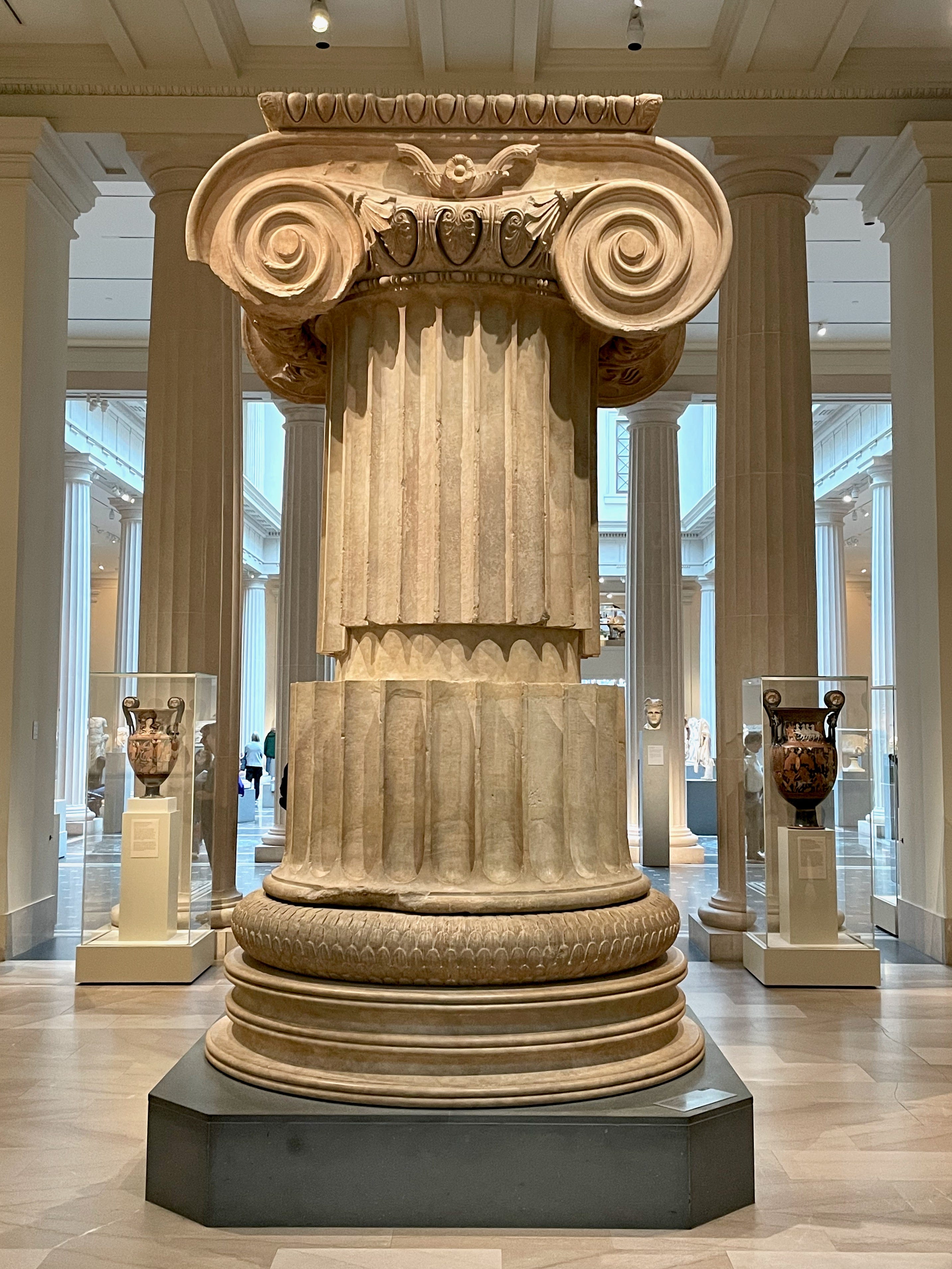
Gallery 160: Hellenistic Sculpture and Architecture, Third-First Century BCE
Highlighted artwork – Column from the Temple of Artemis at Sardis, marble, 12’ high, Hellenistic, c. 300 BCE. Though it’s been reduced to a height of 12 feet, this enormous Ionic column stood 58 feet tall in its original location in the Temple of Artemis (in present day Turkey). The temple was one of the largest ever built in the classical world; it was 450 feet long and its roof was supported by 127 columns, of which this was one. The Amazons, my new favorite girl group, show up here again - carvings depicting them decorated the walls of the temple, which was destroyed by invading Goths in 268 CE (real Goths, not morose high school girls with multiple piercings). I’m not sure what happened to the column’s missing 46 feet, but at its full height it clearly wouldn’t have fit in this gallery, where it now provides an awe-inspiring welcome to the Levy Court behind it.
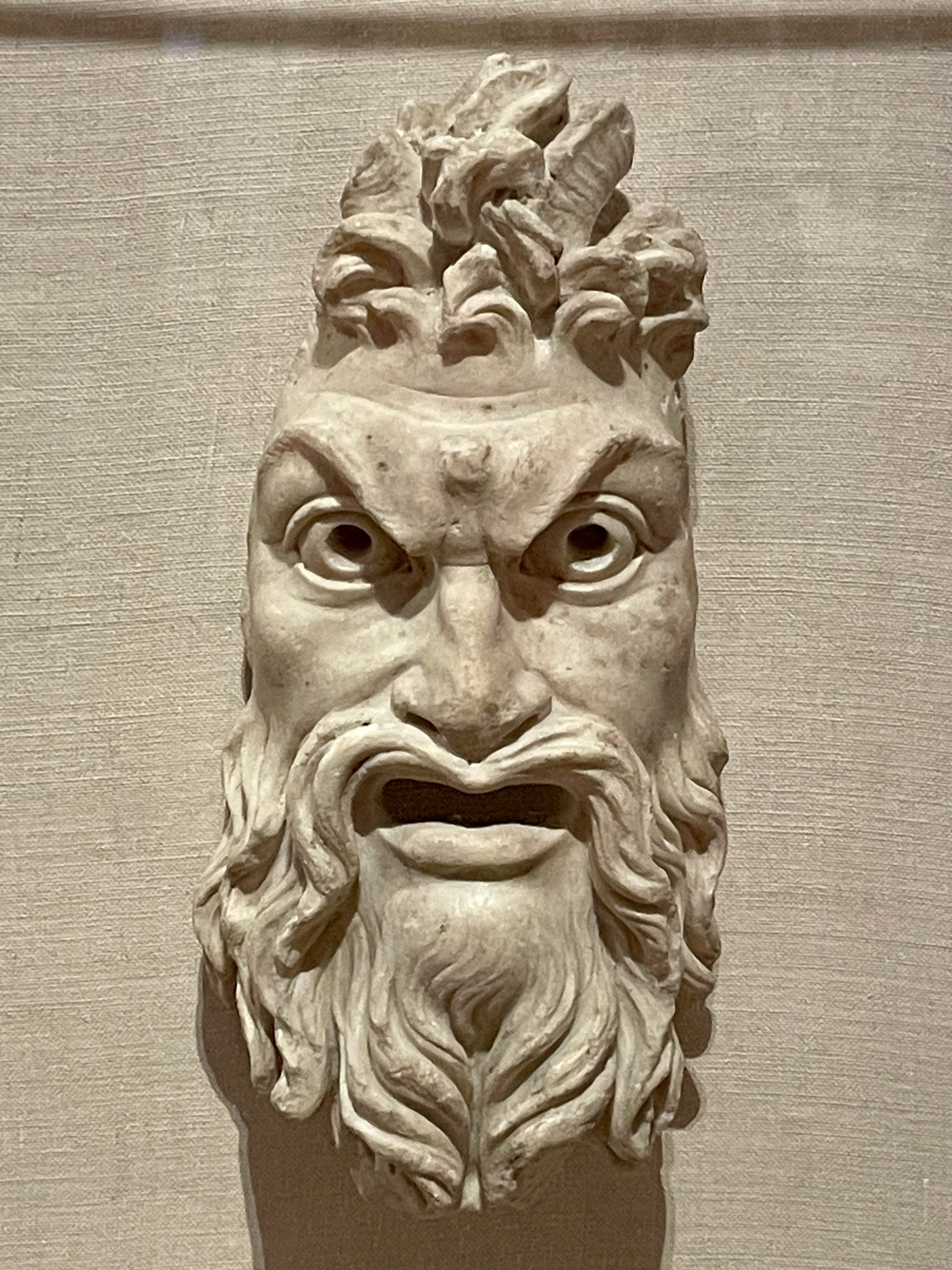
Gallery 161: South Italian Art, Fourth-First Century BCE
Highlighted artwork – Mask of Pan, marble, 11x5x3.5”, early Imperial Roman, first century CE. With the legs, tail, and horns of a goat, Pan was the Greek god of untamed wilderness and fertility, as well as the protector of shepherds. Because of his bestial nature and his habit of roaming the fields and forests, he was known to occasionally cause a “panic” (in case you ever wondered about the etymology of that word). The label for this alarming (panic-inducing?) mask suggests it may have hung in the courtyard of a Roman villa, where it was meant to bring good fortune to the household.
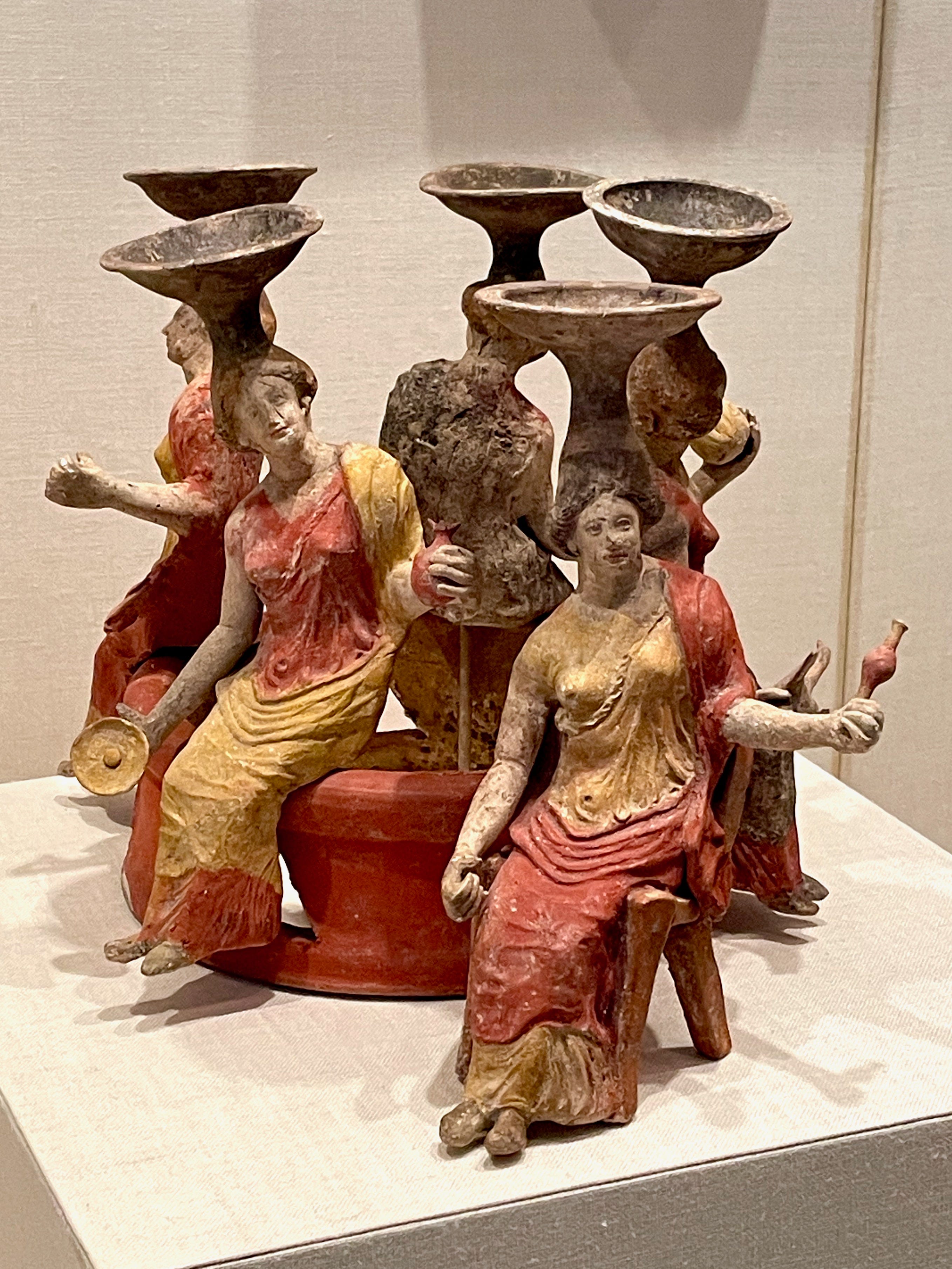
Gallery 162: Leon Levy and Shelby White Court
Highlighted artwork – Group of women incense burner, terracotta, 8” tall, Greek/Tarantine, fourth century BCE. Thought to be related to an ancient agrarian cult that persisted into Roman times, this extremely rare and well-preserved incense burner would have been used in annual harvest rituals dedicated to Demeter, the goddess of agriculture, grains, and the fertility of the earth. After nine days of ceremonies, fasting, sacrifices, and communal feasts, initiates into the mysteries of the cult experienced revelations and visions of the afterlife. Given that Demeter was often associated with poppies, it seems likely that psychedelic drugs were involved in these secret rites.
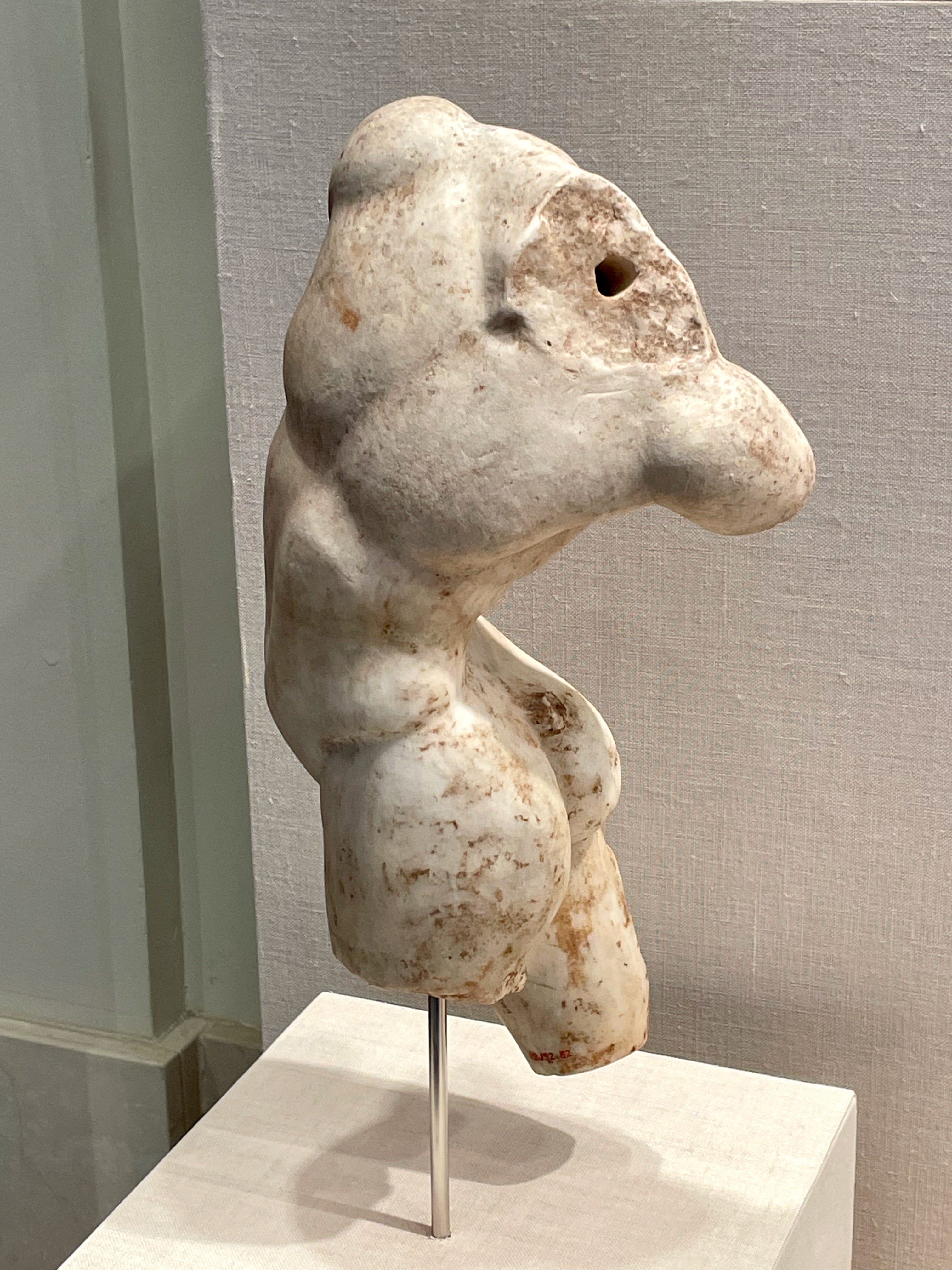
Bonus artwork, same gallery - A young satyr turning to look at his tail, marble, 12x7x5”, Roman, first-second century CE. In a case filled with assorted marble fragments and figures, this one stood out for its graceful pose and the refined articulation of the musculature. I immediately added this to my ever-expanding list of items I would grab if I were ever to pull off a Louvre-style heist at the Met.
Gallery 163: Hellenistic Treasury, Third-First Century BCE
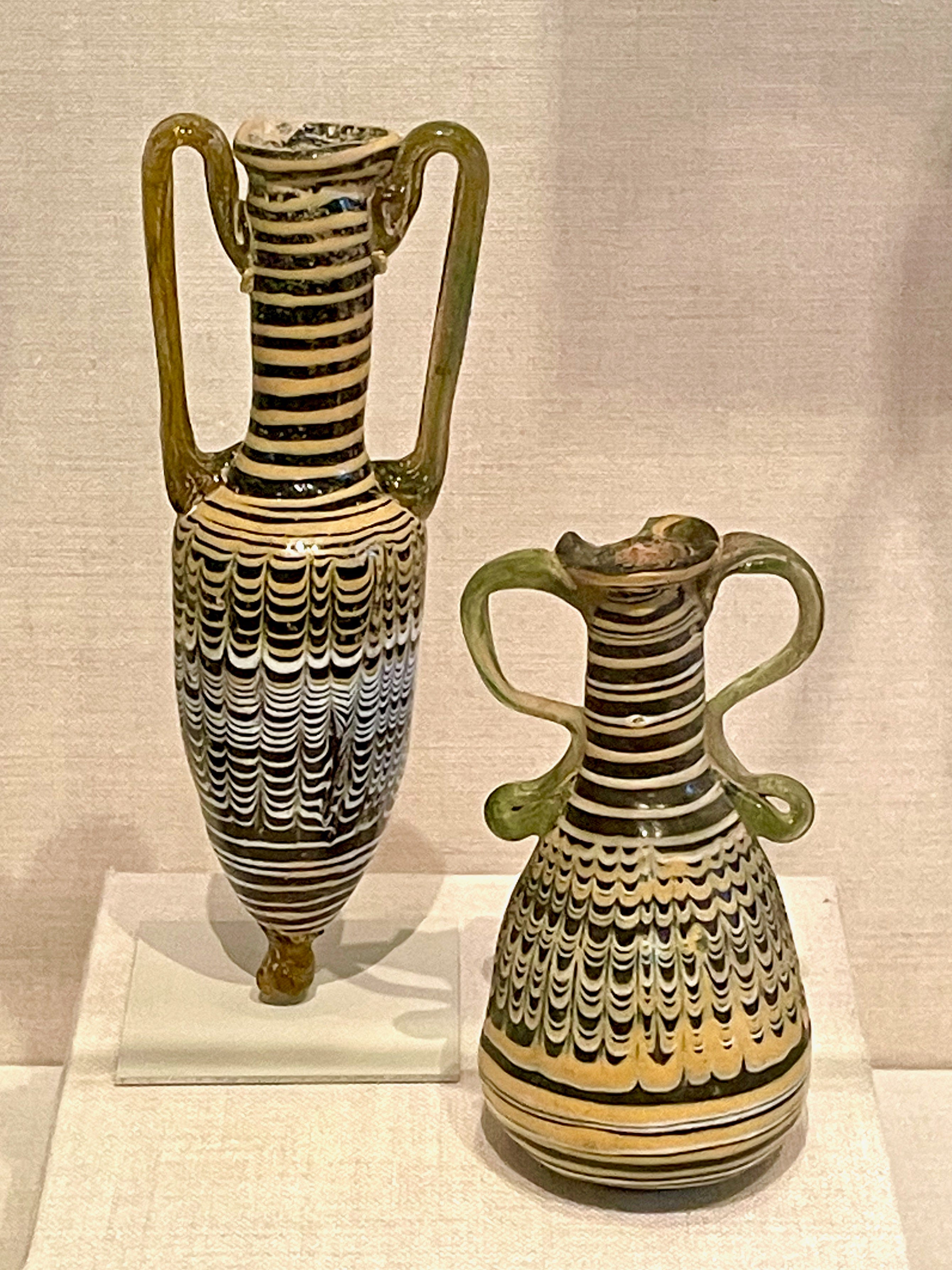
Highlighted artwork – Two amphoriskoi (perfume bottles), glass, 4.5 - 8” tall, Greek/Hellenistic, mid-first century BCE. The label for these two bottles is short on information, but presumably they were used to store perfumed oils, which were widely used throughout ancient Greece and Rome in religious ceremonies and athletic competitions. I just loved their scalloped patterns and anthropomorphic handles, which give them a distinctive personality.


Bonus artwork, same gallery - Phiale (libation bowl), gold, 9” diameter, Greek/Late Classical, 4th-3rd century BCE. The shallow depression in the center of this bowl was used for libation, a religious ritual involving liquid (generally a mix of wine and water) poured from a jug into a phiale as an offering to a deity, performed at ceremonies and feasts as well as in the home before every meal. I was drawn to this glittering disk thinking it was an evocation of the sun, but on closer inspection recognized the pattern of stylized acorns and bees, expertly integrated into an almost abstract design.
Next week, I’ll finish up the Greek and Roman galleries, then head upstairs to start exploring the second floor!
As to that glamorous café of yore, yes, I remember it well, having sat at its tables and spaced out in the… space; at the melody of its fountains and the breezes of its water flow; and sheer gorgeousness of it all. And mourned its passing.
Regarding the Amazon matter, do you truly believe that your comment, thinly veiled as innocent musing, about testosterone (“who needs it, what good has it ever done for humanity, etc.”) is not snarky?... really?... As for the alienation of your male subscribers—I cannot speak for the others, though they may have left to gather arms (as is their wont, you might add)—I choose the path of magnanimity; a wary magnanimity to be sure, in light of your exaltation of, let's call it: the Amazonian principle.
Agreed: the Ionic column is magnificent, even in its abbreviated state, and the mask of Pan an object of fierce beauty. I wonder, though, how its presence over the courtyard of a villa might bring good fortune. Perhaps it was intended to instill panic in guests who neglected to bring gifts and so, in their pandemonium, would flee to the nearest bodega for a bunch of grapes and a bottle of schnaps.
Regarding the Demeter festival, how was it possible that it included both fasting and feasts? Perhaps fasting during the day and partying at night?
BTW, I just learned that, according to mythology, Persephone, Demeter’s daughter, was kidnapped by Hades and dragged underground, her mother's grief then causing the land to become cold and barren; however through an intervention by Zeus (testosterone-laden, no doubt), Persephone was allowed to visit her mother above ground: thus the seasons winter and spring.
About the “young satyr,” I appreciate the way your elegant appreciation—“its graceful pose and the refined articulation of the musculature”—just barely kept in check the exclamation: “What a bod!”
I didn’t see how the amphoriskoi handles are anthropomorphic. They look pretty snaky to me.
Wondering: what happens to the libation once it is poured into the phiale? (That’s another term paper, I guess.)
Thanks so much for the tour. I feel I should offer you a panegyric. Will work on it.
(Footnote: "pandemonium" and "panegyric" do not derive from Pan, as does "panic," which was noted.)